
There’s a moment every car buyer experiences—the excitement of choosing the perfect car slowly turns into one serious question: Should I pay in full or go with EMI?
At first, it sounds like a simple financial decision. But when you sit down, calculate your savings, think about responsibilities, future plans, and peace of mind, it suddenly becomes personal.
Because buying a car is never just about money. It’s about comfort, confidence, and the feeling you carry every time you hold the keys in your hand.
The Dream of Owning a Car
Do you know that for many families in India, a car is still considered a milestone rather than just a vehicle?
It represents independence. Late-night drives. Family road trips. Picking your parents up comfortably. Reaching home safely during heavy rain.
And when that dream becomes real, the next challenge appears—how do you pay for it wisely?
This is where the debate between full payment and EMI begins.
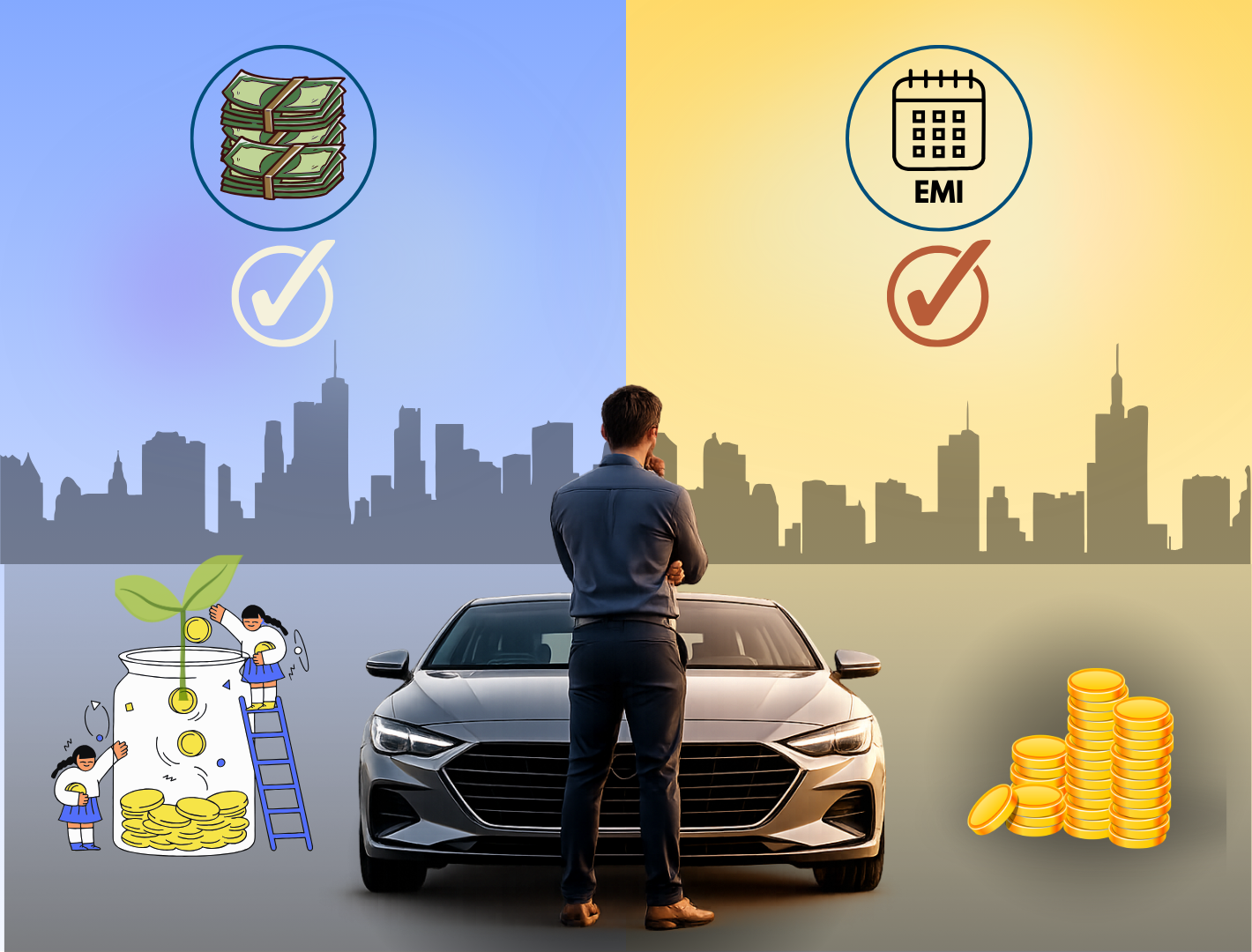
Understanding Full Payment
Let’s start with the traditional route.
Paying the full amount upfront gives a unique sense of satisfaction. No monthly dues, no interest burden, no long-term commitment.
The car is completely yours from day one.
There’s something emotionally peaceful about knowing that every drive is free from future financial pressure. You don’t wake up every month thinking about deductions or deadlines.
But here’s the real question—does paying everything at once affect your savings? Because while full payment saves interest costs, it can also reduce financial flexibility.
You know that feeling when your bank balance suddenly drops after a big purchase? That emotional hesitation is real.
The Rise of EMI
Over the last few years, car financing has become incredibly common in India. According to market insights a large percentage of new car buyers now prefer financing options instead of paying upfront.
Why? Because it allows people to buy better cars without exhausting their savings.
A manageable EMI can make ownership feel easier and more accessible. Instead of waiting years to save the full amount, buyers can start enjoying the car immediately.
And honestly, that feeling of finally driving home your dream car after months of planning—it’s unforgettable.
The Hidden Cost You Must Understand
Now let’s talk about something many people overlook—interest.
While financing reduces immediate financial pressure, it increases the total amount you eventually pay.
Do you know that even a small difference in interest rate can significantly affect long-term cost?
For example, a car worth ₹8 lakhs might cost much more over a five-year repayment period due to interest and processing charges.
This doesn’t mean financing is bad—it simply means understanding the numbers is important.
Because sometimes convenience today can quietly become financial pressure tomorrow.
When Full Payment Makes Sense
Full payment can be a smart choice if:
- You have stable emergency savings
- The purchase won’t affect your financial security
- You want zero debt obligations
- You dislike long-term commitments
There’s also a mental freedom that comes with complete ownership. No paperwork reminders. No repayment schedules. Just you and your car. And for many people, that peace of mind matters more than anything else.
When Financing Becomes the Better Option
Now let’s look at the other side. Choosing an EMI plan can make more sense if:
- You want to preserve savings for emergencies
- You’re investing money elsewhere
- You prefer financial flexibility
- You need the car immediately for work or family
You know that moment when life suddenly demands more from your savings than expected? Medical emergencies, job changes, family responsibilities—life is unpredictable.
Keeping liquidity in hand can sometimes be wiser than exhausting all your funds at once.
That’s why many financially smart buyers balance affordability with flexibility instead of focusing only on ownership pride.
The Emotional Side of Financial Decisions
Here’s something most people won’t openly admit.
Money decisions are emotional. Some people sleep peacefully knowing they own their car completely. Others feel more comfortable keeping savings intact and paying gradually.
Neither approach is wrong. What matters is how secure and stress-free you feel after the purchase.
Because imagine this—what’s the point of owning a beautiful car if the financial pressure behind it constantly worries you? A car should add comfort to your life, not anxiety.
Things You Should Always Compare
Before deciding, compare these carefully:
- Interest rates
- Down payment amount
- Loan tenure
- Monthly affordability
- Insurance costs
- Future financial goals
Do you know that shorter loan tenures usually reduce total interest significantly? A little research today can save thousands tomorrow.
And don’t rush the process. The excitement of buying a car can sometimes make people overlook important details.
Real-World Trends in India
The Indian automobile market is changing rapidly. Rising car prices and growing aspirations are making financing more common across all segments. At the same time, financially aware buyers are also becoming smarter about budgeting and long-term planning.
Some buyers prefer paying fully for smaller cars while choosing financing for premium models. Others use partial down payments to maintain balance.
The idea today is not simply “cash or loan.” It’s about choosing what fits your lifestyle best.
The Final Thought
So, which option truly wins? The answer depends on you. Do you value complete ownership from day one? Or do you prefer flexibility and financial breathing space?
Can you comfortably afford full payment without stress? Or would gradual repayment keep your life more balanced Because in the end, buying a car is not just a financial transaction—it’s an emotional journey. And the smartest choice is not the one that sounds impressive to others.
It’s the one that lets you enjoy every drive without carrying unnecessary pressure in your heart.