
Buying a vehicle is rarely a simple financial transaction in India.
For some, it is the reward for years of hard work. For others, it is the first major family investment. And for many young professionals, it represents independence, success, and freedom.
That is why purchasing a vehicle in India is often driven by far more than specifications and price tags.
Have you ever noticed how two people with the same budget can choose completely different vehicles? One prioritizes safety. Another focuses on mileage. Someone else wants road presence. And a family may simply want comfort for long journeys.
So what really influences purchasing decisions in India today?
Let’s explore the factors shaping the minds and emotions of modern Indian buyers.
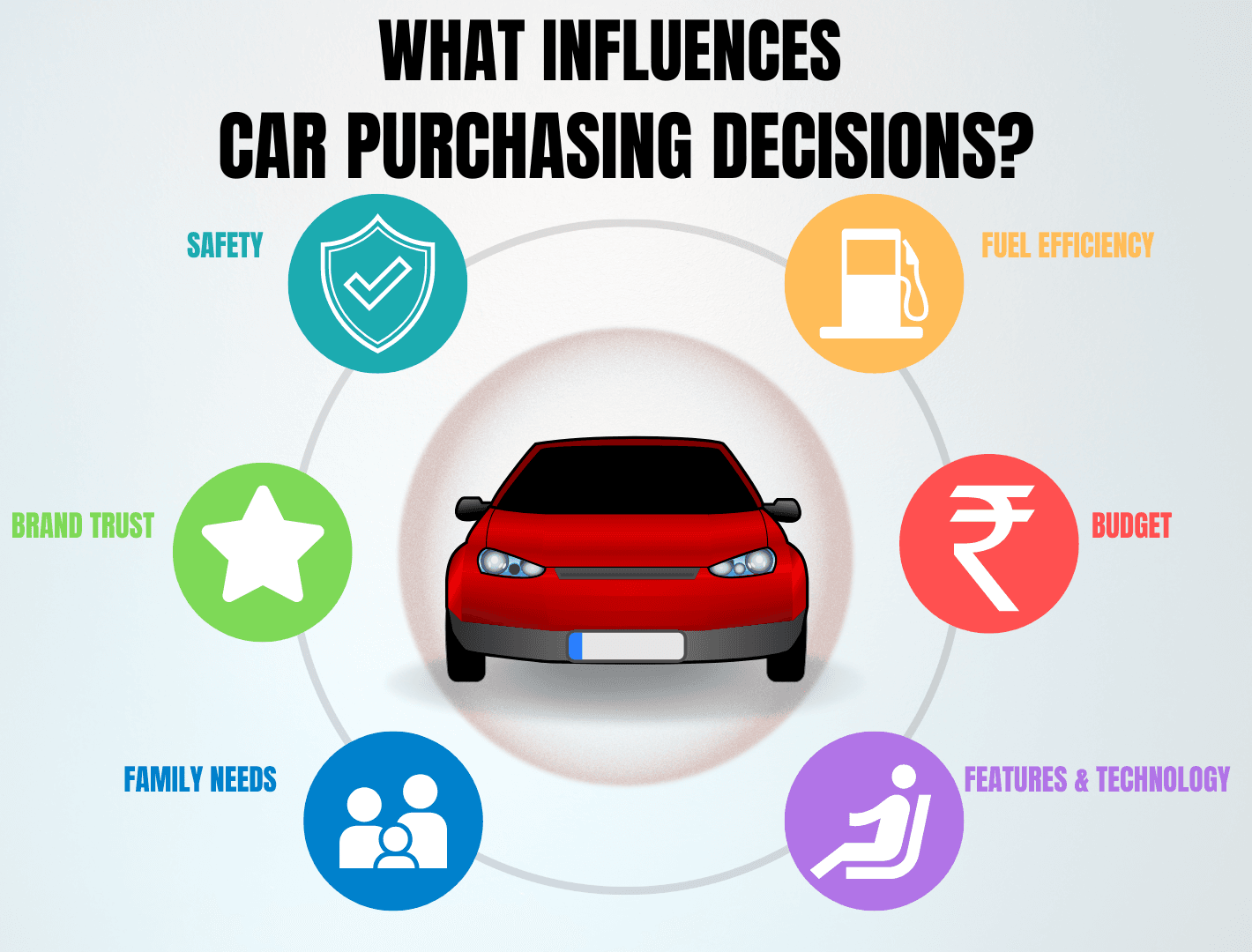
Safety is no longer an afterthought
A decade ago, mileage and affordability dominated conversations. Today, safety has moved to the center of decision-making.
Do you know that according to surveys conducted among Indian buyers, crash-test ratings and airbags are now among the most important factors influencing vehicle selection? Studies found that 9 out of 10 Indian consumers want vehicles to have a safety rating, while safety often ranks ahead of fuel efficiency in buying priorities.
This shift reflects a growing awareness among families.
People are asking questions they didn’t ask before:
- How many airbags does it have?
- What is its crash-test rating?
- Does it offer electronic stability control?
For many households, purchasing a vehicle is no longer just about reaching a destination—it is about reaching safely.
Fuel efficiency still matters deeply
Let’s be honest.
Fuel prices affect almost every Indian household.
Even buyers looking at premium models often calculate running costs before making a decision. Recent market observations suggest rising fuel costs continue to influence consumer preferences toward fuel-efficient options, hybrids, CNG vehicles, and economical powertrains.
You know that feeling when you calculate monthly expenses and realize fuel takes a significant share?
That is exactly why mileage remains one of the strongest influences on purchasing behavior.
A vehicle may look attractive in the showroom, but if ownership becomes expensive, many buyers simply move on to another option.
The emotional power of brand trust
There is something fascinating about Indian consumers.
Many families remain loyal to brands for generations.
A father buys from one manufacturer, and years later the son does the same.
Why?
Because trust matters.
Research on Indian automotive consumers shows that product quality, reliability, and confidence in the brand strongly influence buying decisions. At the same time, buyers are increasingly open to switching brands when they perceive better value or innovation.
This means purchasing decisions today balance tradition and curiosity.
People trust familiar brands, but they are also willing to explore new options if the offering feels compelling enough.
Features have become a major deciding factor
A few years ago, a basic music system felt impressive.
Today, expectations are entirely different.
Buyers want:
- Touchscreen infotainment systems
- Wireless smartphone connectivity
- Reverse cameras
- Connected technology
- Digital displays
- Advanced driver assistance features
Modern consumers compare features almost as carefully as price.
Do you know that many buyers now choose higher variants because they see technology as part of the ownership experience rather than a luxury? Industry observations show increasing importance of convenience and feature-rich cabins in consumer preferences.
As a result, purchasing decisions often involve comparing technology packages just as much as engine specifications.
Family needs shape the final choice
In India, buying decisions are rarely individual.
Parents contribute opinions.
Spouses contribute opinions.
Even relatives contribute opinions.
And honestly, that is part of the experience.
A young professional may dream of a sporty vehicle, but family priorities often shift attention toward:
- Rear-seat comfort
- Luggage capacity
- Ease of entry and exit
- Long-distance comfort
This explains why SUVs continue to attract strong demand across multiple buyer groups.
For many families, purchasing is about practicality first and aspiration second.
Resale value influences long-term thinking
Here’s something buyers think about even before ownership begins.
“What will it be worth after five years?”
That question plays a major role in India.
Certain models consistently retain stronger resale value because of reliability, service availability, and strong demand in the used market.
A smart buyer does not just evaluate purchase price.
They evaluate:
- Future resale value
- Maintenance costs
- Spare part availability
- Long-term ownership expenses
This practical mindset significantly affects purchasing choices across all price segments.
Digital research is changing consumer behavior
Do you know how different the buying process is today compared to ten years ago?
Before entering a showroom, buyers often spend weeks researching online.
They watch reviews.
Compare specifications.
Read owner experiences.
Browse automotive communities.
Even discussions on online forums show consumers actively evaluating safety, reliability, transmission choices, and long-term ownership experiences before making decisions.
This means purchasing decisions are increasingly informed rather than impulsive.
The showroom is often the final step—not the first.
Aspirations are becoming stronger
India’s automotive market is evolving rapidly.
Many buyers today are willing to spend more for premium features, better interiors, and improved driving experiences. Surveys indicate growing interest in premium variants and feature-rich vehicles, even when they come at a higher price.
People no longer ask only:
“Can I afford it?”
They also ask:
“Will I enjoy owning it?”
That emotional shift is transforming purchasing patterns across the country.
Final Thoughts
When people think about buying a vehicle, they often assume the decision is based mainly on price.
But the reality is far more interesting.
Safety.
Fuel efficiency.
Technology.
Brand trust.
Family needs.
Resale value.
Personal aspirations.
All these factors come together to shape modern purchasing decisions in India.
Because at the end of the day, a vehicle is not just transportation.
It becomes part of everyday life.
It carries families on vacations, helps professionals reach opportunities, and creates memories during countless journeys.
And perhaps that is why choosing one feels so important.
It is never just about buying a vehicle.
It is about deciding what kind of ownership experience you want for years to come.