
There’s a strange feeling that hits you after a road accident.
Not just fear.
Not just anger.
But helplessness.
You stand beside your car trying to explain what happened while everyone around you tells a different story. The traffic grows louder, people gather, and suddenly the truth feels difficult to prove.
Now imagine having a silent witness sitting inside your car the entire time.
That’s exactly why the conversation around a dashcam is growing rapidly across India and the world.
But here’s the real question:
Is it genuinely worth spending money on one, or is it just another car gadget people buy because it looks modern?
Let’s talk honestly.
The Reality of Modern Roads
Do you know that India records over 4.6 lakh road accidents every year according to government transport reports?
And the scary part is not just the accidents themselves—it’s what happens afterward.
Arguments.
False blame.
Insurance disputes.
Hit-and-run cases.
Parking damage.
Road rage incidents.
Sometimes, even a small scratch can turn into a stressful situation because nobody has evidence.
This is where a dashcam quietly changes everything.
It doesn’t shout.
It doesn’t interfere.
It simply records the truth.
And honestly, that peace of mind feels priceless once you experience it.
More Than Just a Camera
Many people think this device is only useful for YouTubers or car enthusiasts.
But the reality is very different.
Imagine parking your car outside a market and returning to find a dent on the bumper. No note. No witness. Nothing.
Now imagine having video footage showing exactly what happened.
That small piece of technology suddenly becomes protection—not just for your car, but for your mental peace.
You know that feeling when you drive late at night and constantly stay alert because roads feel unpredictable?
For many drivers, especially families and solo travellers, a dashcam creates a sense of security during those moments.
It’s almost like having another pair of eyes watching silently for you.
Why Drivers Are Rapidly Adopting It
The automotive accessories market in India has seen significant growth in recent years, and recording devices are becoming one of the fastest-growing categories.
Why?
Because driving itself has changed.
Traffic is denser.
Road rage incidents are increasing.
Insurance claims are becoming more documentation-based.
Insurance companies today often prefer visual evidence during claim investigations. In many cases globally, recorded footage has helped drivers avoid false accusations and legal complications.
And here’s something interesting:
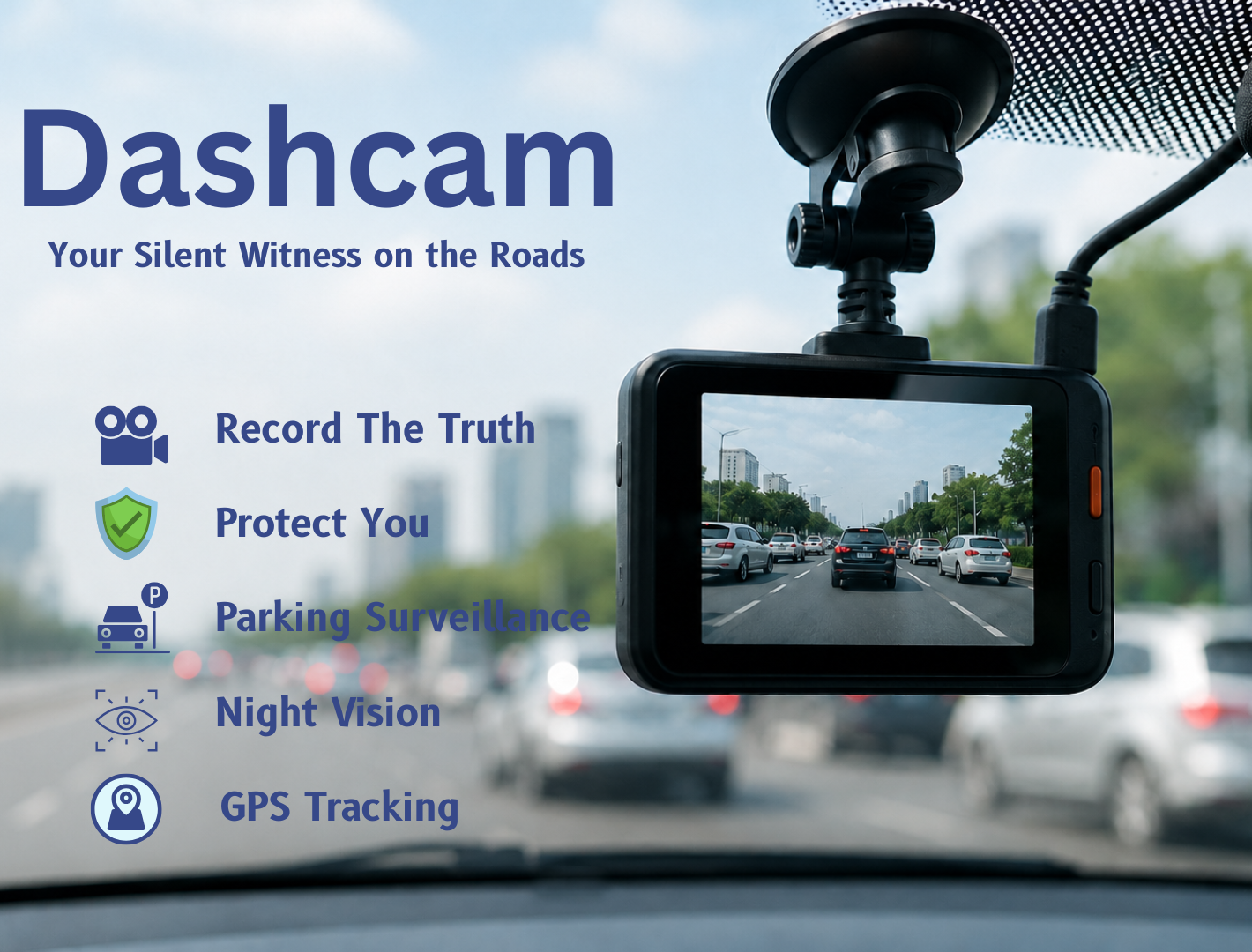
Many modern systems now include parking surveillance, night vision, GPS tracking, and even collision alerts.
So it’s no longer just a recording device—it’s becoming part of smart driving culture.
But Is It Necessary for Everyone?
Honestly, not always.
If you rarely drive, stay mostly in small towns with lighter traffic, or use your car occasionally, you may never feel an urgent need for one.
But if you:
- Drive daily in crowded cities
- Travel frequently on highways
- Own an expensive vehicle
- Park in public areas often
- Run a commercial vehicle
- Or simply value extra security
then a dashcam can become extremely useful over time. The real value appears not every day—but on that one day when something unexpected happens. And life on roads is full of unexpected moments.
The Emotional Side Nobody Talks About
Let’s step away from technology for a second.
Have you ever noticed how emotionally attached people become to their cars?
It’s not just metal and paint.
It’s the first long drive with family.
The late-night chai runs.
The road trips with friends.
The car your parents proudly bought after years of hard work.
So when something happens to it unfairly, it hurts emotionally too.
That’s why many people don’t buy a dashcam for features alone.
They buy it for reassurance.
For confidence.
For the feeling that if something goes wrong, at least the truth won’t disappear.
Things You Should Know Before Buying
Now, here’s the practical side. Not every model is worth buying.
A good system should ideally include:
- Full HD or 2K recording
- Night vision clarity
- Wide-angle lens
- Loop recording
- Parking monitoring
- Heat resistance for Indian summers
You know that Indian weather itself tests every electronic device harshly. Cheap products often stop working properly after continuous heat exposure.
Also, storage quality matters. A poor memory card can corrupt footage exactly when you need it most.
So while choosing one, focus less on flashy marketing and more on reliability.
Are There Any Downsides?
Yes, a few.
Some drivers feel uncomfortable constantly recording while driving. Others worry about battery drain or installation quality.
And honestly, cheaper models sometimes create frustration because footage quality becomes useless during night driving or heavy rain.
But compared to the risks many drivers face daily, most users eventually feel the investment is justified.
Especially after witnessing even one unexpected incident on the road.
Is It Worth It?
Here’s the simplest answer.
You never truly understand the value of a dashcam until the day you actually need it.
And when that moment arrives, it can save money, stress, arguments, legal trouble, and sometimes even your reputation.
Driving today is not the same as it was ten years ago. Roads are faster, busier, and far more unpredictable.
So the question is no longer:
“Is this gadget necessary?”
The better question is:
“How prepared do you want to be?”
Because sometimes the smallest device inside your car becomes the strongest protection outside it. VISIT