
There’s a moment almost every car owner experiences.
The mechanic hands over the bill.
You stare at the amount silently.
And suddenly, that small problem you ignored months ago has become an expensive repair.
It feels frustrating because deep down, most people know the truth:
Many costly repairs could have been avoided earlier.
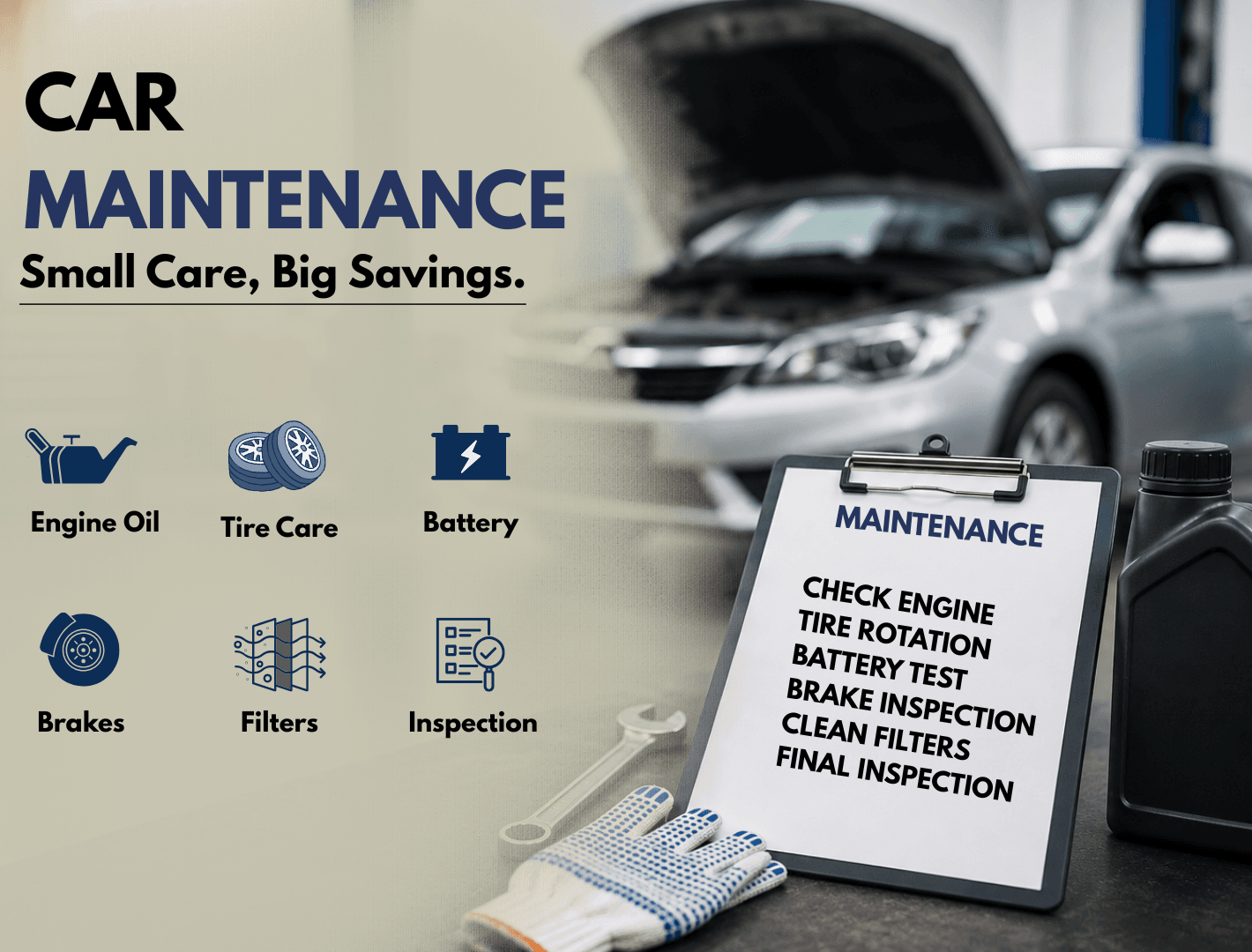
That’s exactly why regular car maintenance matters so much. Proper maintenance not only prevents breakdowns but also improves long-term reliability.
Not because it sounds technical.
Not because workshops keep reminding you.
But because simple habits quietly save thousands of rupees over time.
And honestly, taking care of your vehicle feels a little like taking care of your own health—the earlier you notice problems, the cheaper and easier they are to fix.
1. Change Engine Oil on Time
Let’s begin with the heart of the vehicle.
Do you know that delayed oil changes are one of the most common reasons behind long-term engine damage?
Fresh engine lubrication reduces friction, controls heat, and helps internal components work smoothly. Ignoring replacement intervals slowly increases wear inside the engine.
And the dangerous part?
Damage often happens silently before warning signs appear.
Most modern vehicles recommend service intervals between 7,000–10,000 km depending on driving conditions.
Especially in Indian traffic and heat, timely servicing becomes extremely important.
2. Check Tire Pressure Regularly
This sounds small, but it saves surprising amounts of money.
Incorrect tire pressure affects:
- Mileage
- Tire life
- Braking performance
- Driving comfort
Underinflated tires create more rolling resistance, forcing the engine to work harder and consume more fuel.
You know that feeling when fuel expenses suddenly seem higher than usual? Sometimes, tires are the hidden reason.
Checking pressure every few weeks takes only minutes but improves safety and efficiency significantly.
3. Avoid Aggressive Driving
Sudden acceleration.
Hard braking.
Rapid gear changes.
These habits not only increase fuel consumption but also wear out brakes, clutch components, and tires faster.
Do you know that smooth driving can improve mileage by up to 15–20% in some situations? Driving calmly does more than save fuel—it reduces long-term repair costs too.
And honestly, smoother driving usually feels less stressful emotionally as well.
4. Replace Air Filters on Time
Engines need clean airflow to perform efficiently.
Dirty air filters restrict airflow, reducing performance and increasing fuel consumption. And because Indian roads often expose vehicles to dust and pollution, filters can become dirty much faster than expected.
This is one of the simplest maintenance habits that improves engine breathing and efficiency immediately.
5. Don’t Ignore Warning Lights
Many drivers continue driving for weeks even after dashboard warning lights appear. That’s risky.
Modern vehicles are designed to detect problems early before major damage occurs.
Ignoring those signals often transforms minor issues into expensive repairs later. You know that nervous feeling when a small problem suddenly becomes serious?
That’s exactly what warning systems are designed to prevent.
6. Wash Your Car Regularly
This sounds cosmetic, but it actually protects your investment.
Dust, mud, bird droppings, pollution, and rainwater slowly damage paint and metal surfaces over time.
Especially during monsoon season, moisture and dirt accumulation can increase rust risks underneath the vehicle. Regular cleaning helps preserve paint quality, resale value, and overall appearance.
And honestly, driving a clean vehicle simply feels emotionally satisfying. Good maintenance habits help prevent unexpected breakdowns and expensive repairs.
7. Use Good Quality Fuel
Cheaper fuel options sometimes create long-term problems through impurities and inconsistent quality.
Using trusted fuel stations improves engine efficiency and reduces internal deposits.
Do you know that poor fuel quality can quietly affect injectors, combustion quality, and mileage over time?
Sometimes saving a small amount today creates larger expenses tomorrow.
8. Monitor Battery Health
Few situations feel more frustrating than a dead battery during an important day.
Modern vehicles depend heavily on electronics:
- Infotainment systems
- Sensors
- Lighting
- Smart features
Battery health becomes critical.
Regular checks, clean terminals, and timely replacement prevent sudden breakdowns and unnecessary towing costs.
Especially in extreme Indian summers, batteries face additional stress.
9. Rotate Tires Periodically
Most people forget this completely.
But uneven tire wear reduces lifespan significantly.
Rotating tires at recommended intervals ensures balanced wear and improves stability, safety, and performance.
And because tires are expensive, extending their life even slightly creates noticeable savings over years of ownership. Regular maintenance checks ensure long-term performance and safety.
10. Follow the Service Schedule for Regular Maintenance
This may sound obvious, but many people delay servicing until problems appear.
Preventive care always costs less than emergency repairs.
Manufacturer-recommended servicing includes inspections that identify small issues before they become expensive failures.
Do you know that vehicles with proper service records usually maintain stronger resale value too?
That means good maintenance protects not only your vehicle—but your future resale price as well.
Why Small Habits Matter So Much
Here’s something interesting.
Most major repair bills don’t appear suddenly.
They build slowly through ignored minor problems.
A neglected fluid.
A worn filter.
Low tire pressure.
Skipped servicing.
Over time, these small issues quietly create larger mechanical stress.
And honestly, the emotional stress of unexpected breakdowns often feels worse than the financial cost itself.
Especially during family trips, office emergencies, or long journeys.
Cars Are More Than Machines
For many people, vehicles become part of everyday life emotionally.
They witness:
- Family vacations
- Late-night drives
- Career journeys
- Celebrations
- Important memories
That’s why taking care of a vehicle feels personal sometimes.
Because protecting your car often means protecting the moments connected with it too.
Final Thoughts
Saving money on car ownership is not about avoiding service or maintenance.
It’s about being smart before problems become expensive.
Simple habits, regular inspections, and responsible driving quietly reduce long-term costs while improving reliability, safety, and peace of mind.
And honestly, a well-maintained vehicle doesn’t just perform better.
It feels better.