
Hybrid Cars: Where Sustainability Meets Performance
Think of the way we drive like a long-term relationship that’s finally getting a much-needed spark. For years, we’ve loved the roar of the engine, but let’s be real—the guilt of rising fuel costs and the weight of our carbon footprint have started to take the joy out of the journey.
But here’s where it gets exciting. We aren’t just switching gears; we’re evolving. Hybrid cars are stepping in as the perfect middle ground—that sweet spot where sustainability finally meets high-octane performance. It’s about more than just tech; it’s about a drive that feels as good for the soul as it does for the planet.
In 2026, hybrid cars are no longer just niche eco-friendly choices; they stand at the forefront of automotive innovation blending impressive performance with tangible environmental benefits. As fuel prices fluctuate and sustainability gains priority for many drivers, understanding which hybrids offer the best balance of power, efficiency, and everyday usability has never been more relevant. This article breaks down the top hybrid models that are commanding attention on the roads today, helping you make an informed decision whether you’re considering your next vehicle or simply keeping up with automotive advancements. For more info…
At its core, a hybrid car combines two power sources: an internal combustion engine (usually petrol) and an electric motor. These systems work together intelligently to optimize fuel efficiency and reduce emissions. Depending on the driving conditions, the vehicle can switch between the engine, the electric motor, or use both simultaneously.
There are several types of hybrid vehicles:
- Mild Hybrids (MHEVs): Assist the engine with a small electric motor but cannot run on electricity alone.
- Full Hybrids (HEVs): Can operate on electric power alone for short distances.
- Plug-in Hybrids (PHEVs): Feature larger batteries that can be charged externally, allowing longer electric-only driving ranges.
A classic example is the Toyota Prius, which pioneered hybrid technology and demonstrated that fuel efficiency and reliability could go hand in hand.
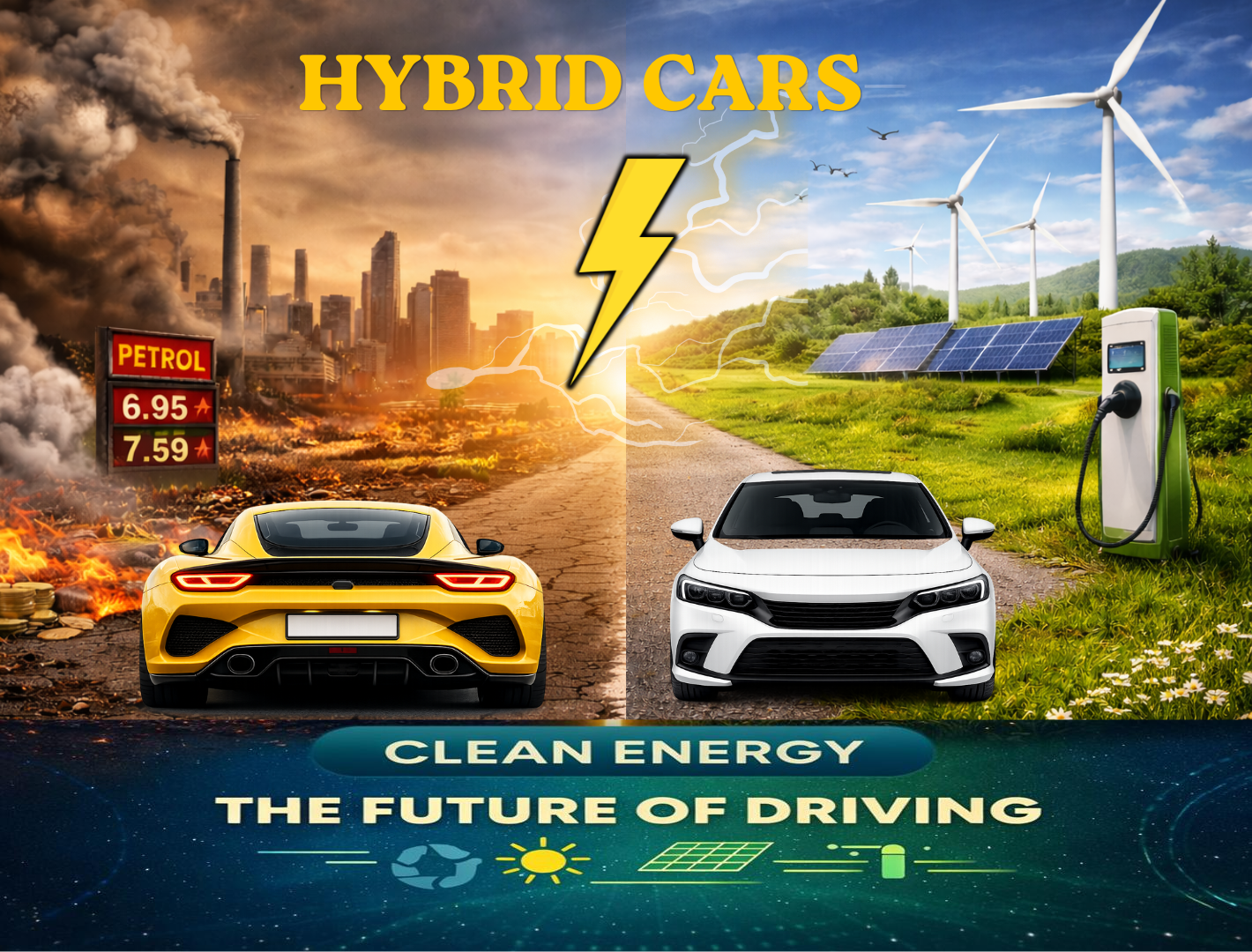
Sustainability: Driving Toward a Greener Future
One of the most compelling reasons for the rise of hybrid cars is their environmental benefit. Traditional petrol and diesel vehicles emit significant amounts of carbon dioxide and other pollutants. Hybrid vehicles, on the other hand, reduce these emissions by relying more on electric power—especially in city driving conditions where stop-and-go traffic is common.
By using regenerative braking systems, hybrids capture energy that would otherwise be lost and store it in the battery. This not only improves efficiency but also reduces wear on braking components. Additionally, lower fuel consumption means fewer trips to the petrol pump and reduced dependence on fossil fuels.
Automakers like Toyota and Honda have been at the forefront of hybrid innovation, continuously improving battery technology and overall vehicle efficiency.
Performance of Hybrid Cars: More Than Just Efficiency
A common misconception is that hybrid cars compromise on performance. In reality, modern hybrids often deliver impressive power and responsiveness. The electric motor provides instant torque, resulting in quick acceleration—something traditional engines struggle to match at low speeds.
When combined with a petrol engine, this dual power system enhances overall performance. For example, luxury and performance brands have embraced hybrid technology to create powerful yet efficient vehicles. The Ferrari SF90 Stradale is a prime example, offering breathtaking speed while incorporating advanced hybrid engineering.
Similarly, the Porsche Cayenne E-Hybrid delivers a dynamic driving experience without compromising on environmental responsibility. These vehicles prove that sustainability and high performance can coexist seamlessly.
Fuel Efficiency and Cost Savings
Hybrid cars excel in fuel efficiency, making them an attractive option for daily commuters and long-distance travellers alike. By relying on electric power during low-speed driving and optimizing engine usage, hybrids significantly reduce fuel consumption.
Over time, this translates into substantial cost savings. Although hybrid vehicles may have a higher upfront cost compared to conventional cars, the savings on fuel and maintenance can offset the initial investment. Government incentives and tax benefits in many regions further enhance their affordability.
Moreover, hybrids typically experience less engine wear due to the assistance provided by the electric motor. This can lead to lower maintenance costs and longer vehicle lifespan.
The Role of Hybrids in the Transition to Electric Vehicles
While fully electric vehicles (EVs) are gaining popularity, hybrid cars serve as a crucial bridge between traditional combustion engines and a fully electric future. For many drivers, concerns about charging infrastructure and range anxiety make EVs less practical. Hybrids address these concerns by offering the flexibility of a petrol engine alongside electric capabilities.
Vehicles like the Toyota Camry Hybrid provide a familiar driving experience while introducing the benefits of electrification. This makes hybrids an ideal choice for those looking to transition gradually toward greener mobility.
Luxury Meets Sustainability
The luxury car segment has also embraced hybrid technology, integrating it into high-end models without compromising comfort or sophistication. Brands like BMW and Mercedes-Benz are incorporating hybrid systems into their flagship vehicles.
These cars feature premium interiors, advanced infotainment systems, and cutting-edge safety technologies, all while maintaining lower emissions. Hybrid technology allows luxury brands to offer powerful engines alongside eco-friendly features, catering to a new generation of conscious consumers.
Challenges and Considerations
Despite their many advantages, hybrid cars are not without challenges. Battery costs, though decreasing, still contribute to the higher price of hybrid vehicles. Additionally, battery disposal and recycling remain environmental concerns that need to be addressed.
Another factor to consider is driving habits. Hybrid vehicles deliver maximum efficiency in urban settings with frequent braking and acceleration. On long highway drives, the benefits may be less pronounced compared to city use.
However, ongoing advancements in battery technology and energy management systems are rapidly addressing these challenges, making hybrids more efficient and accessible than ever before.
The Road Ahead
The future of hybrid cars looks promising as technology continues to evolve. With improvements in battery efficiency, lightweight materials, and intelligent energy management systems, hybrids are becoming more powerful, efficient, and environmentally friendly.
As governments worldwide push for stricter emission standards and consumers become more environmentally conscious, hybrid vehicles are expected to play a significant role in the global automotive landscape. They represent a practical and effective solution for reducing emissions while maintaining the performance and convenience that drivers expect.
Conclusion
Hybrid cars truly embody the idea that sustainability and performance can go hand in hand. By combining the strengths of traditional engines and electric motors, they offer a balanced approach to modern mobility.
Whether it’s reducing environmental impact, saving on fuel costs, or enjoying a dynamic driving experience, hybrids deliver on multiple fronts. As the automotive industry continues to innovate, hybrid vehicles will remain a key player in shaping a cleaner, smarter, and more efficient future.
In a world where the demand for sustainability is growing rapidly, hybrid cars are not just an option—they are a revolution on wheels.