
The Hidden Invoice
An electric car is often sold to us as a quiet, smooth escape from the ever-climbing prices at the petrol pump. If you’ve spent any time stuck in the heavy traffic of Gurugram or Delhi, you’ve likely watched a green-plated vehicle glide past in total silence and felt a pang of envy. You start doing the mental math: no more oil changes, no more smog tests, and a “fuel” bill that looks like a fraction of what you pay now. But as someone who has spent years analyzing the shifts in India’s automotive landscape, I’ve realized that while the “fuel” is cheaper, the total cost of ownership has some quiet corners that many first-time buyers overlook.
If you are considering making the switch in 2026, it is important to look beyond the shiny showroom floor. Let’s pull back the curtain on the real-world expenses that come with living with an electric car.
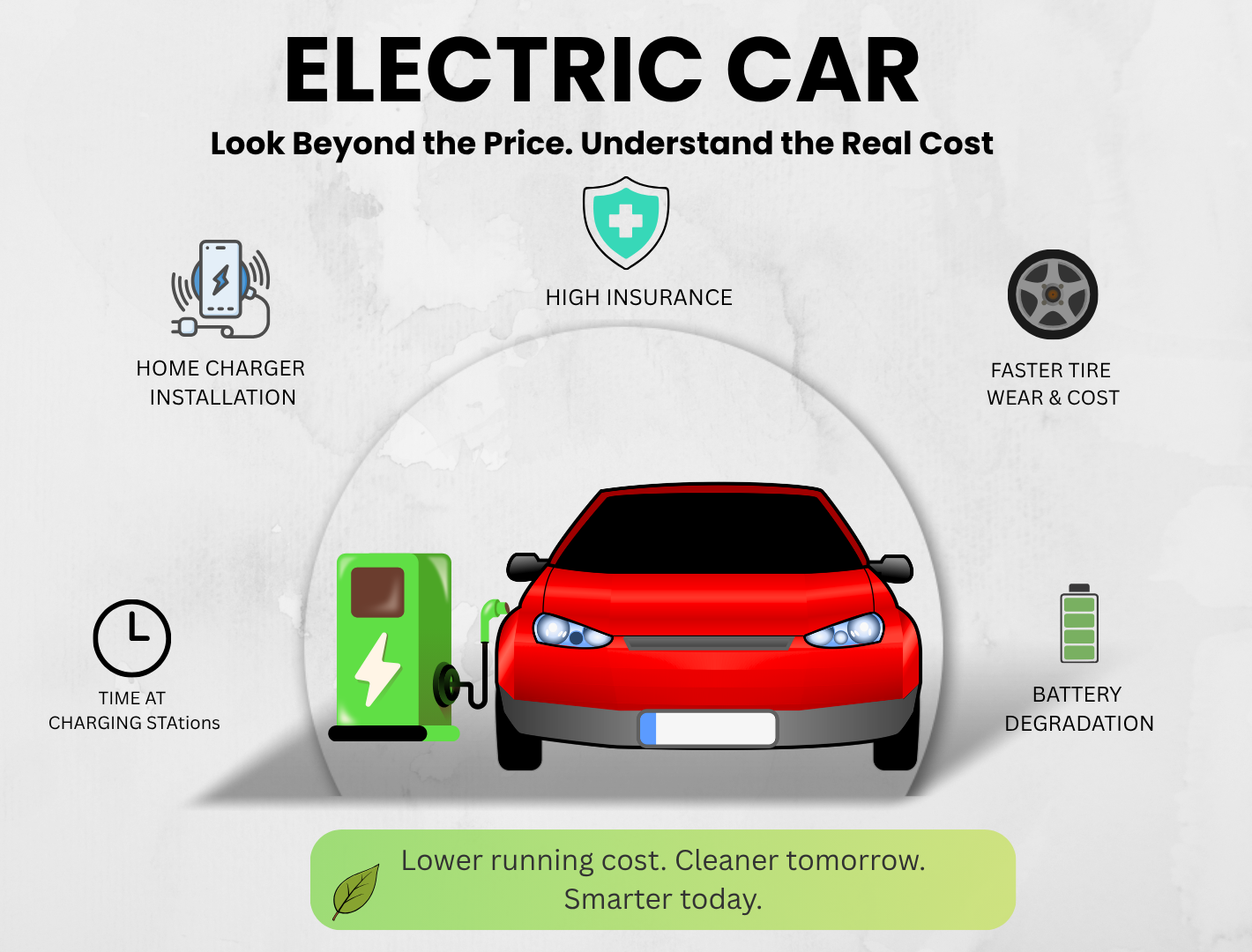
The “Entry Fee” You Didn’t Expect
When you buy a traditional car, you don’t have to pay to “install” a petrol station at your house. With an electric car, your home becomes your primary refueling hub, and that transition isn’t always free.
- The Charger Installation: Most standard Indian homes or older apartment complexes aren’t wired for high-speed charging.
- The Cost: Installing a dedicated Level 2 fast-charging station—essential if you don’t want to wait 20 hours for a full battery—can cost between ₹25,000 and ₹60,000 depending on your home’s wiring.
- The Hidden Hurdles: If you live in a high-rise, your housing society might require a separate meter or an upgraded electrical load capacity, which adds another layer of administrative fees and stress.
Insuring a Computer on Wheels
Have you ever thought about why your smartphone insurance is so high? It’s because the components are fragile and expensive to replace. An electric car follows the same logic.
- Valuable Components: The battery pack alone can account for nearly 40% of the vehicle’s total value.
- The Premium Hike: Because these parts require specialized labor and expensive materials to repair after even a minor accident, insurance companies often charge a 10% to 15% premium over equivalent petrol models.
- The Recurring Cost: This isn’t a one-time fee; it’s an annual “tech tax” that stays with you for the life of the vehicle.
Why You’ll Visit the Tire Shop More Often
One of the most exciting things about an electric car is the “instant torque”—that feeling of being pushed back into your seat the moment you hit the pedal. But that thrill comes with a physical cost to your tires.
- The Weight Factor: Batteries are incredibly heavy, making EVs significantly weightier than standard cars.
- Faster Wear: The combination of heavy weight and high power means your tires often wear out 20% faster than they would on a petrol car.
- The Specialized Price: You can’t just put any tires on an electric car. You need “EV-specific” tires designed to handle the weight and keep the cabin quiet, and these carry a much higher price tag at the shop.
The Time-Value of the “Quick Charge”
In our busy lives, time is a currency we can’t afford to waste. While India’s charging network is expanding rapidly, it still doesn’t match the five-minute convenience of a petrol pump.
- The Planning Burden: On a long road trip, a “refuel” isn’t a quick stop; it’s a 45-to-60-minute coffee break.
- The Infrastructure Gap: While states like Maharashtra and Delhi are leading the way, finding a functional fast-charger in semi-urban areas can still lead to “range anxiety”—a psychological stress that petrol drivers simply don’t face.
- The Opportunity Cost: If you’re a professional on a tight schedule, that “lost hour” at a charging station is a logistical tax on your productivity.
The Shadow of Battery Degradation
Every electric car manufacturer offers a generous warranty—usually 8 years or 1,60,000 km. That’s great for the first owner, but what happens as the car ages?
- The Smartphone Effect: Just like your phone, a car battery loses its ability to hold a full charge over time.
- The Reality: By year seven, your car might only give you 80% of the range it did on day one. While you may never need a full replacement, this gradual loss affects your daily utility.
- The Resale Mystery: Because the used EV market in India is still maturing, buyers are often nervous about battery health. This can lead to steeper depreciation compared to a reliable petrol SUV.
Does Math Still Work?
After reading about these “hidden” corners, you might think an electric car is a bad investment. But that’s not the case at all. The secret is in how you use it.
- The High-Mileage Win: If you are a daily commuter doing 50km or more in city traffic, the savings are massive. Even with higher insurance, the fact that you spend roughly ₹1 per km on electricity compared to ₹7 on petrol means the car eventually pays for itself.
- The Maintenance Relief: You genuinely do save on oil changes, spark plugs, and complex engine repairs.
- The Driving Joy: There is a deep, emotional satisfaction in driving a car that doesn’t vibrate, doesn’t make noise, and respects the air your family breathes.
The Human Verdict: Moving with Your Eyes Open
Owning an electric car in 2026 isn’t just about the technology; it’s a lifestyle shift. It’s about being part of the “Silent Revolution” while understanding the practical trade-offs.
The goal of this study isn’t to talk you out of going electric, but to make sure you walk into the showroom with your eyes wide open. When you account for the home charging setup, the specialized tires, and the insurance premiums, you can plan your budget effectively.
The happiest owners are those who didn’t just buy a car—they bought into a new way of moving. They know that while the electric car changes how you spend your money, it still represents the most exciting and responsible shift in Indian automotive history.
So, do the math, check your home’s wiring, and if the numbers work for your life, join the revolution. Just remember: the best investment is the one where you’ve accounted for every single rupee before you hit the road.