
The automobile industry is going through a massive transformation. Cars are no longer just machines that help us travel from one place to another. Today, they are becoming smart, connected, and intelligent systems. At the centre of this change is one powerful concept: advanced technology-driven automation.
This shift is turning traditional vehicles into digital platforms, much like smartphones. It is not only changing how cars function but also how companies design, sell, and interact with customers.
Let’s explore how this transformation is shaping the future of mobility in a simple and easy-to-understand way.
What Is Automation in the Automobile Industry?
Automation refers to the use of technology to perform tasks with minimal human involvement. In the automobile sector, it is transforming how vehicles operate.
Modern cars include features such as self-driving capabilities, automatic braking systems, voice assistants, and over-the-air software updates that eliminate the need to visit service centres. These technologies work together to make vehicles smarter, safer, and more efficient.
In simple terms, it reduces manual effort while improving performance and convenience. For example, when a car automatically adjusts its speed based on traffic conditions, it is a clear demonstration of this technology in action.
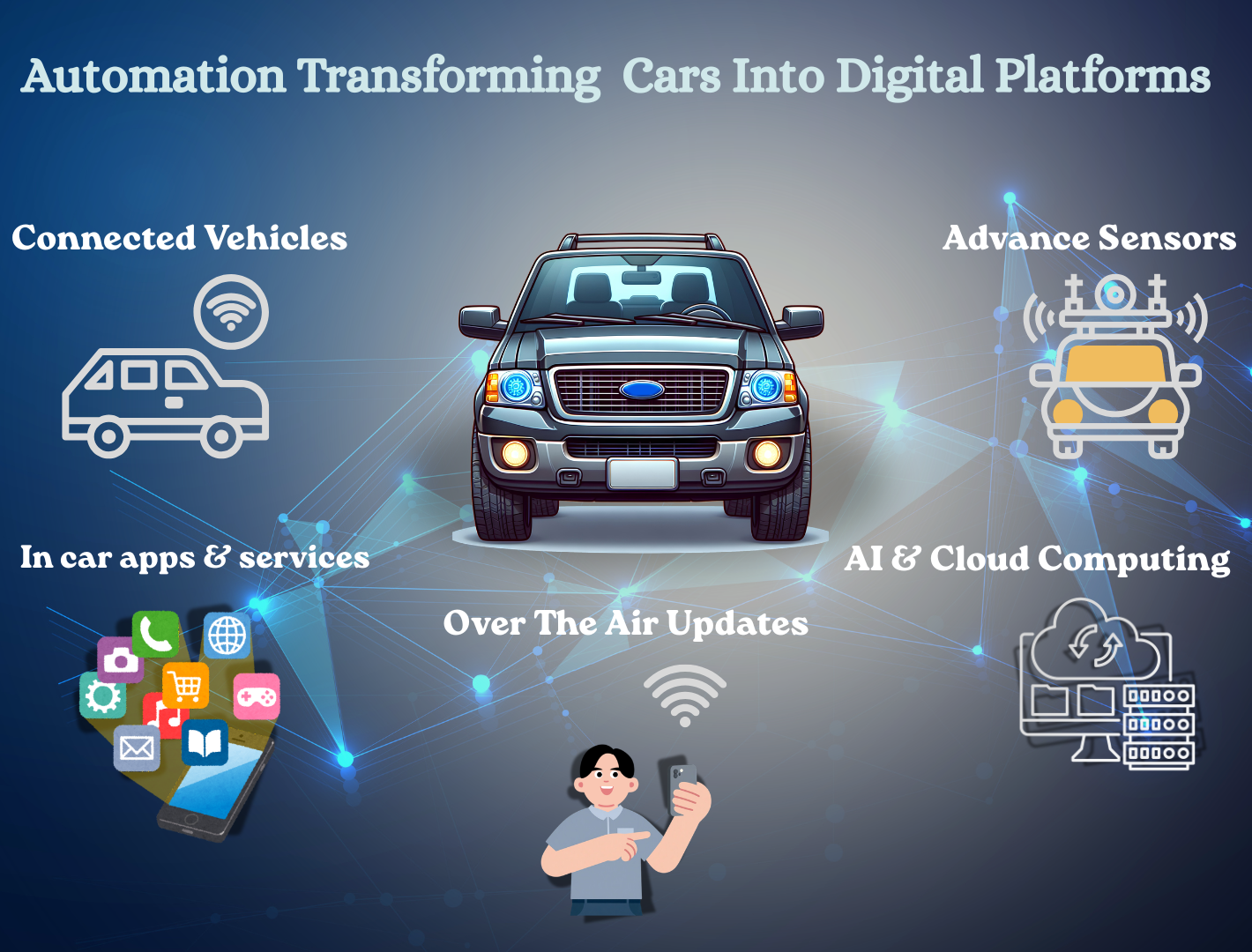
Cars Are Becoming Digital Platforms
A digital platform is a system that allows different services, apps, and technologies to work together.
Examples of digital platforms:
- Smartphones (apps, games, payments)
- Smart TVs (streaming services)
- E-commerce platforms
Now, vehicles are becoming part of this ecosystem.
Modern cars come equipped with:
- Touchscreen dashboards
- Internet connectivity
- App integrations
- Cloud-based services
This means your car can now:
- Stream music from apps
- Provide real-time navigation
- Sync with your smartphone
- Receive software updates remotely
That’s why many people describe modern vehicles as “smartphones on wheels.”
Role of Automation Tools in Modern Cars
Behind every intelligent vehicle, there are powerful systems working in the background.
These systems help in:
- Monitoring vehicle performance
- Updating software automatically
- Managing data from sensors
- Enhancing safety features
For example:
- Sensors detect obstacles
- Software processes the data
- The vehicle reacts instantly (such as applying brakes)
All of this happens within seconds, ensuring a seamless driving experience.
Importance of Automation Testing in Vehicles
Safety is extremely important in the automobile industry, and this is where automation testing plays a critical role.
It ensures that:
- Software functions correctly
- Safety features respond accurately
- Systems perform reliably under different conditions
Instead of manual testing, companies use advanced systems to:
- Run thousands of tests quickly
- Detect errors early
- Improve reliability
For example, before launching self-driving features, manufacturers simulate various scenarios such as rain, traffic, and accidents to evaluate vehicle behaviour. This process makes cars safer and more dependable.
Expanding Beyond Driving
Automation in vehicles is no longer limited to driving functions. It now extends across the entire ecosystem.
It is used in:
- Customer support chatbots
- Automated manufacturing processes
- Smart maintenance alerts
- Personalized driving experiences
For instance, modern vehicles can notify drivers about low fuel levels, service schedules, or tire pressure issues. This widespread integration enhances convenience and user experience.
Creating New Business Opportunities
This technological shift is not just about innovation—it is also driving business growth in the automobile sector.
As vehicles evolve into digital platforms, companies can:
- Offer subscription-based services
- Sell premium features
- Provide in-car entertainment
- Use customer data to improve services
For example, users can subscribe to navigation systems, access music services directly from their car, or unlock features like heated seats through software updates.
This approach allows automakers to generate continuous revenue instead of relying solely on one-time vehicle sales.
Data + Smart Systems = Personalized Experience
Modern vehicles collect large amounts of data, including driving habits, location, and user preferences.
By analysing this data, systems can:
- Suggest better routes based on traffic
- Recommend nearby restaurants or fuel stations
- Adjust seat position, temperature, and music automatically
For example, if you regularly listen to music while driving, your car can start playing your favourite playlist as soon as you begin your journey. visit
This creates a highly personalized experience, similar to how smartphones adapt to individual users.
Real-World Examples in Automobiles
Here are some practical examples of digital platforms in cars:
- Vehicles with built-in app stores
- Cars receiving over-the-air updates
- Connected systems syncing with smartphones
- Navigation tools updating in real time
These examples highlight how vehicles are becoming part of a larger digital ecosystem.
The Future of Smart Vehicles
The future of this technology is incredibly exciting. We can expect:
- Fully self-driving cars
- Advanced AI assistants
- More connected ecosystems
- Enhanced safety systems
Vehicles will not just respond to commands—they will anticipate needs. For instance, they may suggest leaving early due to traffic, book parking automatically, or sync with your daily schedule.
Challenges to Overcome
Despite its benefits, there are several challenges:
- Data Privacy
User data must be securely protected. - Cybersecurity
Connected systems can be vulnerable to cyber threats. - High Costs
Advanced technologies can be expensive to implement. - User Trust
Many people are still hesitant about self-driving features.
Addressing these challenges is essential for long-term success.