
In today’s interconnected world, the automobiles industry doesn’t just depend on factories and showrooms—it depends heavily on global trade routes, stable fuel prices and smooth logistics. When conflicts arise in key regions like West Asia and the Red Sea, the impact is not limited to politics; it directly affects industries that rely on international supply chains.
India’s automobiles sector, which contributes around 7.1% to the country’s GDP and 8% to total exports, is currently facing this reality. What may look like distant geopolitical tensions is actually creating real challenges for manufacturers, exporters, and even consumers.
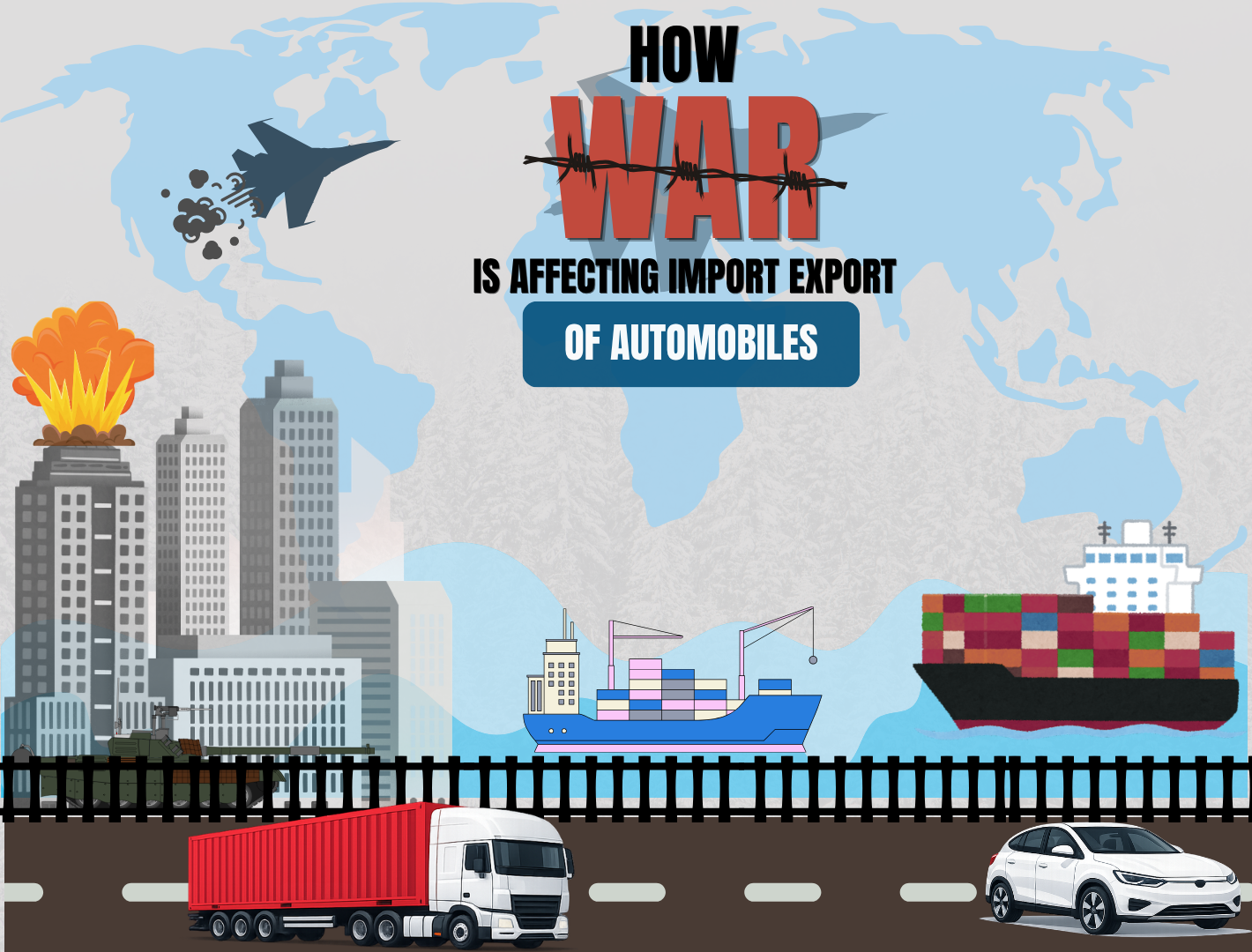
The Logistics Bottleneck: Choking the Supply Chain
The most immediate impact of the current war situation is the physical disruption of shipping. The Strait of Hormuz and the Red Sea critical arteries for global trade have become high-risk zones.
For Indian exporters, this has led to a “Cape of Good Hope” reality. Rerouting ships around the tip of Africa adds 10 to 15 days to transit times and slashes global shipping capacity by nearly 9%.
Beyond the time delay, the financial cost is staggering. War-risk insurance premiums for vessels have surged from roughly $10,000 to as much as $500,000 per voyage. For manufacturers, this translates to “emergency surcharges” of nearly $2,000 per container, a cost that eventually trickles down to the end consumer.
A $9 Billion Export Engine at Risk
India has become a major exporter of automobiles, with car exports reaching $8.8 billion in 2025. A large share of these exports goes to the Middle East, especially Saudi Arabia and the UAE.
This heavy dependence on a single region creates vulnerability. When conflicts affect these areas, exporters face delays, storage costs, and working capital pressure as vehicles remain stuck in transit or at ports.
Major automobile manufacturers are particularly exposed because a significant portion of their exports goes to this region. If shipments slow down or stop, production planning and revenue projections are directly affected.
The Two-Wheeler Disruption
The crisis is not limited to cars. India’s two-wheeler industry, which is one of the largest in the world, is also experiencing disruptions.
More than half of Indian households rely on motorcycles and scooters, making this sector a key part of both domestic and export markets. Companies exporting to Gulf countries have already faced shipment pauses and delays.
Since car ownership in India is still relatively low, international markets remain important for growth. Any disruption in exports affects not only large companies but also suppliers, logistics providers and small manufacturing units.
Raw Materials and the “Energy Shock”
Global conflicts also increase the cost of raw materials and energy. Oil price fluctuations directly impact transportation and manufacturing expenses. Materials like aluminum, steel, plastics, and petrochemicals become more expensive, raising the overall cost of vehicle production.
When manufacturing costs rise, companies either reduce profit margins or increase vehicle prices. Both options create challenges in maintaining demand and competitiveness in the market.
Strategy for the Future: Biogas and EVs
Despite these challenges, the situation is also pushing the industry to think differently. One positive development is the growing focus on alternative fuels like biogas-blended CNG, which can reduce dependence on imported oil and lower fuel costs.
At the same time, the push toward electric vehicles (EVs) is gaining momentum. In an environment where fuel prices are uncertain, EVs and efficient CNG vehicles offer better long-term value for consumers and businesses.
This shift can help India reduce its exposure to global fuel volatility and strengthen its domestic automotive market.
The Road Ahead
The current global situation shows how deeply connected the automotive industry is to international trade and geopolitics. Conflicts in distant regions can quickly turn into logistical and economic challenges for manufacturers in India.
However, the industry is adapting by:
- Exploring new export markets in Latin America and Southeast Asia
- Improving supply chain strategies
- Investing in alternative fuels and electric mobility
While the road ahead may be uncertain, these steps will help the Indian automotive sector become more resilient and better prepared for future global disruptions.
In the end, challenges like these don’t stop progress—they push industries to innovate, adapt, and move forward more strategically.