
When we think of cleaning our cars, we often think of the interior first getting rid of those French fry crumbs, cleaning the dashboard, maybe vacuuming the floor mats. But in this post, we’ll be talking more about the outer shine and honestly, what I’m about to tell you might change your entire morning routine.
Here’s the scene: We often hire a boy who comes to clean our cars before leaving for the office, so we can get a dust-free car. He shows up with his trusty cotton cloth, gives your car a quick wipe to remove the dust, and boom—he’s done. You hand over ₹50, your car looks shiny, and off you go.
Except here’s the problem nobody talks about.
In that simple process, day by day, we are leaving scratches on the car’s paint which are negligible from the naked eye. Those tiny swirl marks you can’t see today? Give it six months. A year. They’ll be there, screaming at you every time sunlight hits your bonnet at the right angle.
Let me explain what’s actually happening.
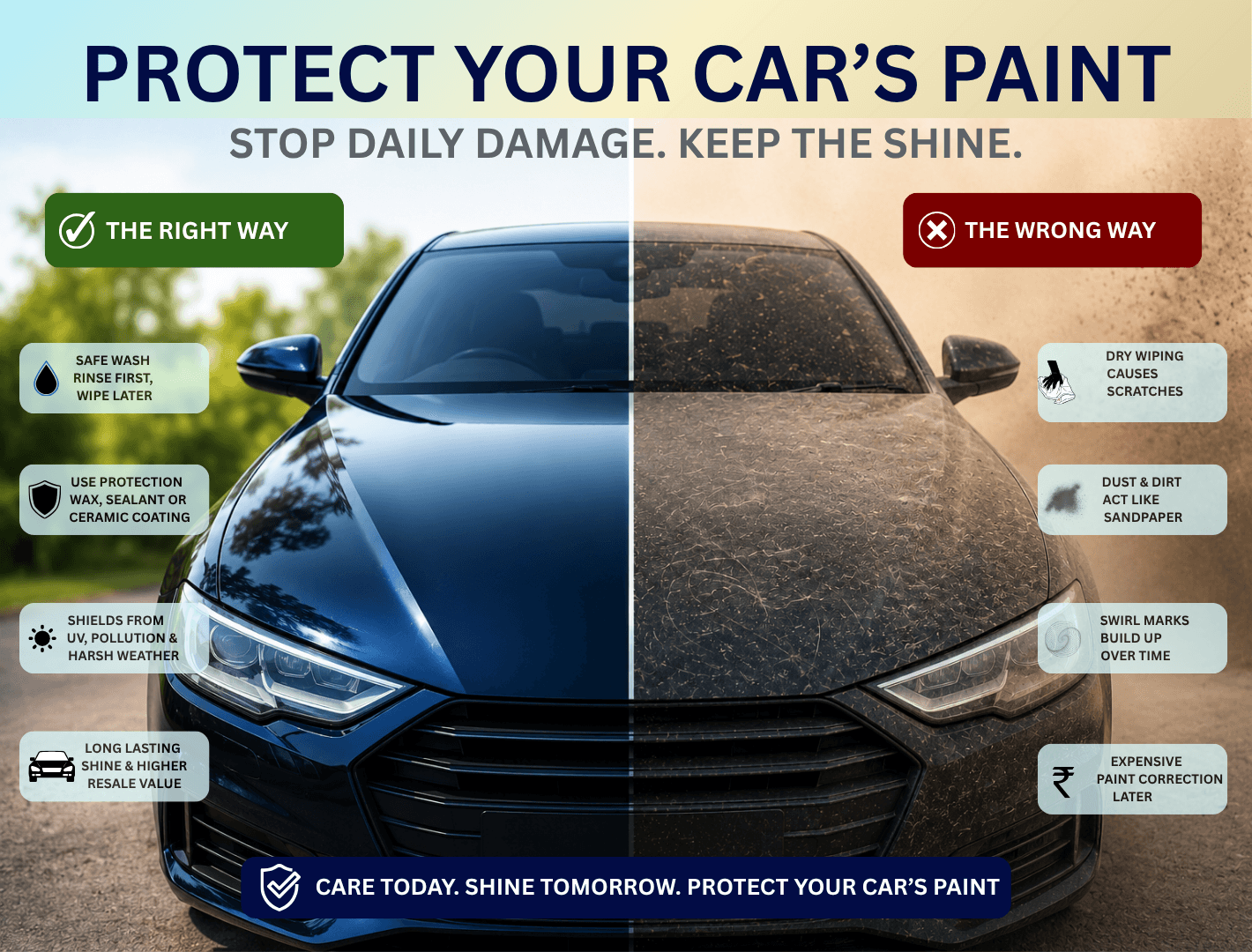
The Invisible Damage to Car’s Paint You’re Ignoring
That dust sitting on your car isn’t just harmless dirt. It’s a cocktail of brake dust, construction debris, pollen, tiny sand particles, and even microscopic rock fragments. When a dry cloth drags all of that across your paint, it’s basically sandpaper in slow motion.
Your car’s paint has three layers primer, base coat and clear coat. That shiny top layer, the clear coat, is what gives your car its gloss. It’s also what takes the beating every single morning when that cloth makes its rounds.
Think about it. One wipe creates maybe a few dozen micro-scratches. Now multiply that by 365 days. That’s thousands of tiny imperfections building up until your paint looks dull, tired, and old—even if the car is barely three years out of the showroom.
And here’s the kicker: by the time you notice the damage, it’s already permanent. The only fix? Expensive paint correction that can cost anywhere from ₹15,000 to ₹45,000.
The Mistakes We’re All Making (Without Knowing It)
Let’s be real. Most of us don’t know the first thing about proper car care. We just do what seems logical, what we’ve seen others do, what’s convenient. But convenience is killing your paint. Here are the biggest culprits:
Mistake #1: Dry Wiping
This is the big one. Using a dry towel—no matter how soft—on a dusty car creates scratches. Always. The right way? Rinse first, wipe later. Water lifts the dust particles so they wash away instead of scraping across your paint like tiny knives.
Mistake #2: Wrong Materials
Old t-shirts, kitchen towels, random rags—these are all terrible for car paint. They’re too rough, they trap dirt, and they cause more harm than good. Even cheap microfiber cloths from the local market aren’t much better.
Mistake #3: Cleaning in Direct Sunlight
Your car cleaner wiping down your bonnet at 2 PM in scorching heat? Bad idea. Heat makes your paint softer, which means dust particles dig in deeper, and water spots form faster. Early morning or evening is the sweet spot.
Mistake #4: Using Dish Soap
I’ve seen people wash their cars with the same soap they use for dishes. Please, stop. Dish soap strips away any protective wax or coating on your paint, leaving it exposed and vulnerable. Use proper car wash shampoo designed for automotive finishes.
Mistake #5: No Protection At All
Going months or years without any kind of protective layer is like walking around Delhi in peak summer without sunscreen. Your paint is getting hammered by UV rays, pollution, heat, rain, and dust every single day. And it’s losing the battle.
How to Actually Protect Your Car’s Outer Layer
Alright, enough doom and gloom. Let’s talk solutions. Here’s how you can keep that outer shine without slowly destroying it.
Step 1: Ditch the Dry Cloth
Stop letting anyone wipe your car dry. Period. If you need to remove dust quickly, use a spray bottle with water or a quick detailer spray. These products encapsulate the dust particles so they lift off safely instead of scratching.
Better yet, invest in a proper car duster with treated fibers that attract dust electrostatically. They’re not expensive (₹300-₹800) and they’ll save you thousands in paint correction down the line.
Step 2: Get the Right Tools
Quality matters. Buy good microfiber towels the plush, soft kind, not the thin scratchy ones. For washing, use a microfiber wash mitt, not a sponge. For drying, use a dedicated microfiber drying towel or a chamois.
These aren’t luxury items. They’re basic necessities if you care about your car’s appearance.
Step 3: Learn Proper Washing Technique
Use two buckets one with soapy water, one with clean rinse water. Dip your mitt in soap, wash a section, rinse the mitt in clean water, then back to soap. This prevents you from washing your car with dirty, contaminated water full of grit.
Always work top to bottom. Roof first, then windows, hood, doors, and lower panels last (they’re the dirtiest). Rinse frequently. Be gentle. You’re cleaning, not scrubbing a cooking pot.
Step 4: Protection Is Non-Negotiable
This is where most people drop the ball. They wash their car religiously but skip protection entirely. That’s like brushing your teeth but never using toothpaste.
Traditional wax used to be the go-to solution, but let’s be honest, it barely lasts a month in Indian conditions. Between the heat, UV exposure, dust and pollution, wax breaks down fast. You’re constantly reapplying, constantly spending money, and never getting ahead.
Should We Use Harsh Chemicals? Let’s Talk Protection Options
Here’s the thing, you don’t need harsh chemicals to protect your car. You can use water to clean your cas’s surface and to protect you car’s paint you can go for coating
Which One Makes Sense?
Honestly, it depends on your situation. If you’re planning to sell your car in a year, maybe sealants work fine. If you want long-term protection without the monthly hassle, ceramic coating makes more sense. If you do a lot of highway driving, PPF on the front plus coating on the rest is the sweet spot.
The real question isn’t which product is “best” it’s what fits your budget, how long you plan to keep the car, and how much maintenance you’re willing to do.
What Actually Matters
Whatever you choose, remember this: protection is cheaper than correction. Fixing damaged paint costs ₹15,000-₹45,000. A car with faded, scratched paint can lose ₹50,000-₹3,00,000 in resale value. Even basic protection pays for itself.
The Real Decision You’re Making
Here’s what nobody tells you: doing nothing is also a choice. And it’s usually the most expensive one.
Every car in Gurgaon faces the same enemies—brutal UV rays, heavy pollution, dust storms, acid rain, bird droppings. Your paint is getting attacked daily. The only question is whether you’re going to protect it or pay to fix it later.
I’ve seen too many car owners skip protection to save money upfront, then spend triple that amount on paint correction two years later. Don’t be that person.
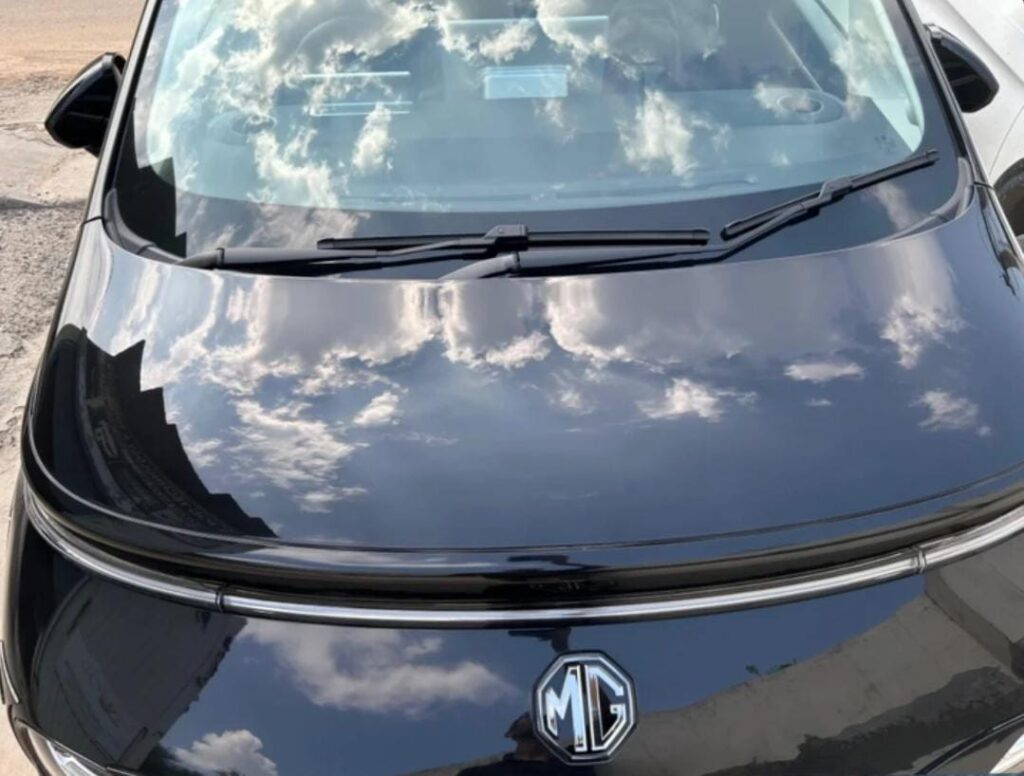
Where to Start
First, assess your car’s current condition. If the paint already has swirl marks or fading, you’ll need paint correction first before any protection makes sense. No point sealing in damage.
Second, decide what level of protection fits your life. Be honest about your budget and how much maintenance you’re willing to do.
Third, find someone who knows what they’re doing. Whether it’s waxing, sealants, or coating, application quality matters more than the product itself. A bad coating job is worse than no coating. A good wax application is better than a rushed ceramic coating.
Your car isn’t just transportation. It’s something you worked hard to own. It deserves proper care, not just good intentions and a dusty cloth.
Figure out what protection makes sense for you, and actually do it. Future you will thank present you.
How often should I wash my car after coating?
Every 2-3 weeks instead of weekly. Coated cars stay cleaner much longer, and washing is quicker because dirt doesn’t stick.
Can I apply coating myself?
DIY kits exist, but professional application is highly recommended. The process requires paint correction, proper surface prep, and precise application. Poor DIY jobs can look worse than no coating at all.
Will coating prevent all scratches?
It prevents minor scratches from washing, dusting, and light contact. Deep scratches from impact, keys, or accidents can still penetrate. For that level of protection, you’d need Paint Protection Film (PPF).
My car already has swirl marks. Is it too late?
Not at all! Those marks can be removed through paint correction (polishing/compounding). Once corrected, coating is applied to lock in that perfect finish and prevent future damage.
Can I use automatic car washes?
You can, but hand washing is better for preserving the coating. If you use automatics, choose touchless options. Harsh brushes can gradually reduce the coating’s effectiveness.
Ready to stop the daily damage and actually protect your car? Our professional nano ceramic coating services are designed for Indian conditions extreme heat, heavy pollution, and everything in between. Get in touch for a free consultation and paint assessment.